
Recipe: Millefolie di Manzo by Chef Elisa Prociatti
October 16, 2023
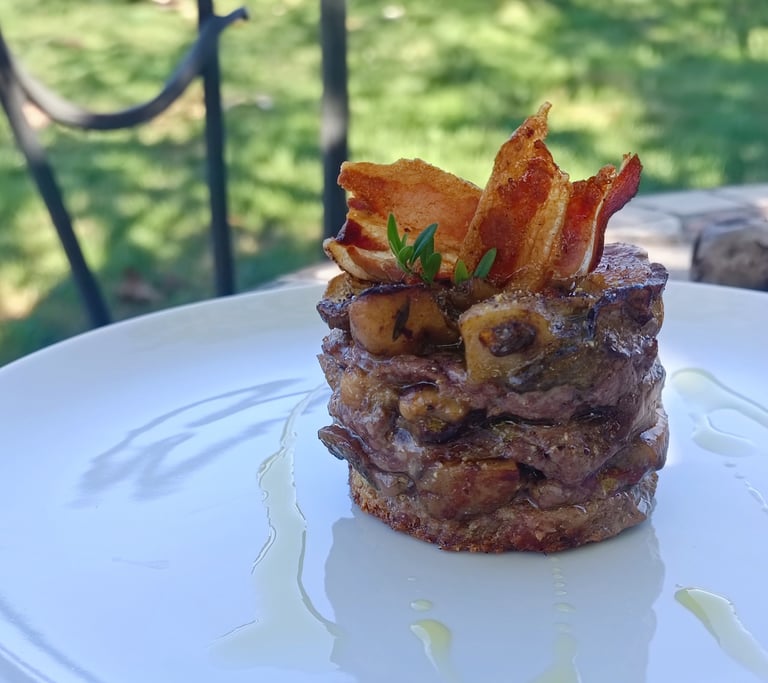
Welcome to a culinary adventure that transports us to the heart of Tuscany, a region renowned for its picturesque landscapes and time-honored cooking traditions. In this blog, we’re diving into a delightful recipe: Millefoglie di Manzo con Funghi Porcini Freschi, Pancetta Croccante e Timo from local Chef Elisa Porciatti. This dish, known as Millefoglie, boasts a history as rich and intricate as the layers that define it.
Millefoglie, the star of our show, is a name that rolls off the tongue with a certain lyrical elegance. Its Italian origin, meaning “a thousand leaves,” perfectly encapsulates the delicate and flaky layers that make this dish an irresistible masterpiece. But there’s more to this culinary gem than meets the eye.
Beyond its deliciousness, millefoglie has a fascinating history that can be traced back to the kitchens of 17th-century France. It was then known as “mille-feuille,” a dessert enjoyed by the aristocracy during extravagant feasts. Over the centuries, this culinary wonder migrated across borders and adapted to various cuisines, including the Italian tradition.
Today, Chef Elisa Porciatti brings you a Tuscan twist on this classic delight, infused with the rich flavors of fresh porcini mushrooms, crispy pancetta, and the aromatic touch of thyme. It’s a testament to the timeless appeal of millefoglie, marrying tradition with innovation and local ingredients to create a culinary masterpiece that transcends borders.
Join us as we dive into the layers of history, culture, and flavor that make this a recipe worth savoring. It’s a tribute to the heart and soul of Tuscany, and we invite you to savor every bite.
Ingredienti per 8 persone:
1 spicchio di aglio
500 grammi di filetto di manzo tagliato a fette sottili tipo carpaccio
Olio extra vergine di oliva
6 fette di pancarrè’
Pepe e sale
400 grammi di funghi porcini freschi
Timo in foglie
6 fette di pancetta di circa 3mm di spessore
Indicazioni:
Pulire bene i funghi eliminando la parte terrosa del gambo e tagliarli a fettine. Far dorare in una padella lo spicchio d’aglio in 2-3 cucchiai di olio, unire i funghi e farli trifolare bene. Prima di toglierli dal fuoco regolare di sale e pepe e profumare con le foglioline di timo precedentemente tritato e lasciar raffreddare.
Con un coppapasta di circa 4 cm di altezza e 6 cm di diametro, leggermente unto di olio, incidere una fetta di pancarrè ed eliminare la parte in eccesso. Procedere così con le altre fette di pane.
Distribuire sul pane un cucchiaio di funghi, poi una fettina di filetto. Continuare così alternando funghi e filetto pressando bene ogni strato e terminando con i funghi.
Tagliare le fette di pancetta in striscioline sottili. Nel frattempo, mettere sul fuoco una padella antiaderente, quando calda aggiungere la pancetta. Cuocere entrambe le parti fino a che diventeranno croccanti e poi adagiarle su un vassoio coperto con carta assorbente per far asciugare il grasso in eccesso.
Prendere un coppapasta di circa 4 cm di altezza e 6 cm di diametro, adagiarvi le fette di pancarrè precedentemente coppate, condire con un po’ di sale, olio e pepe il pane e cominciare a formare gli strati. Mettere un primo strato di carne a coprire il pane, dopodiché coprire con i funghi. Continuare ad alternare carne e funghi fino ad arrivare in cima al coppapasta. Terminare con uno strato di funghi e condire con un giro di olio.
Sistemare il millefoglie su una placca coperta da carta forno e cuocerlo in forno caldo a 200° per 8 minuti per ottenere la cottura al sangue, oppure prolungare la cottura di un paio di minuti.
Una volta terminata la cottura sfilare il millefoglie dal coppapasta e condire con un filo d’olio. Guarnire il millefoglie di filetto e funghi porcini aggiungendo una fettina di pancetta croccante e un rametto di timo fresco.