
The Best of Siena in One Day
January 30, 2025
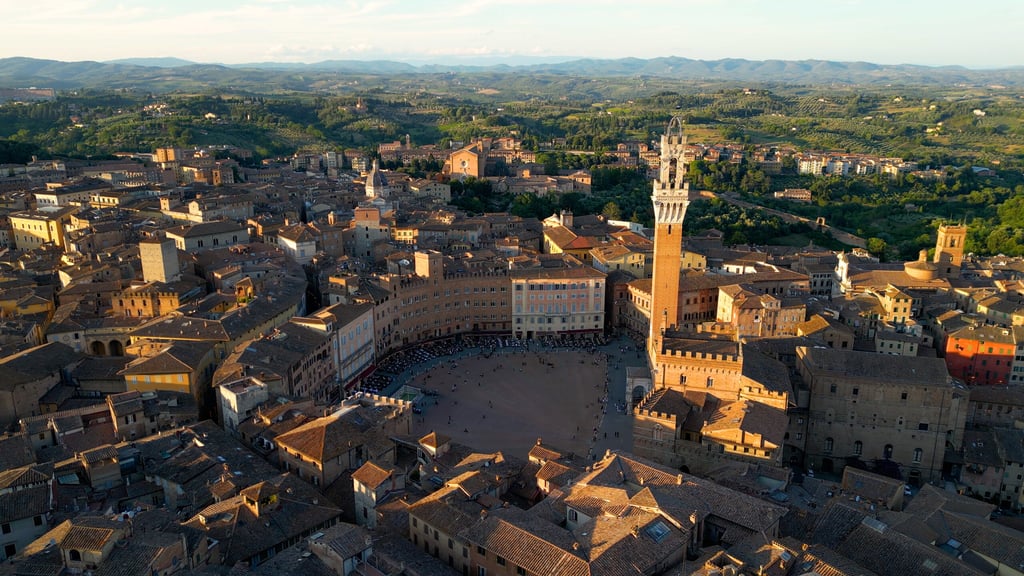
Architecture, art, cuisine, traditional brick and stone cityscapes, and rich local culture – Siena is a veritable time capsule of medieval Tuscany. Its historic center – designated as a UNESCO World Heritage Site – has remained mostly untouched through the centuries, making the city a must-visit for Tuscan travelers.
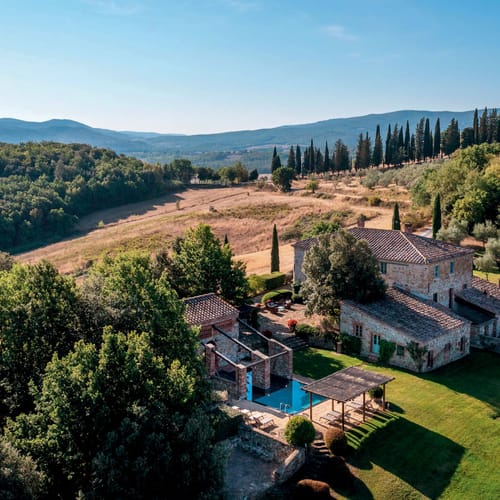
Siena lies only 30 kilometers from Casali di Casole, an ideal day trip for travelers staying in an authentic farmhouse, villa, or penthouse at the historic estate. Our concierge team has organized countless excursions to this fascinating city, giving them invaluable insight into the best ways to spend a day exploring its iconic landmarks. Discover their recommendations for the most memorable things to do in “la città del Palio.”
Traveling to Siena
Guests of Casali di Casole can reach Siena in approximately 45 minutes by car, either through rental or private transport. Contact the concierge during or before your stay for personalized assistance in reserving your transportation to Siena.
Most other day visitors to Siena will travel from Florence by train, car, or private transport. Trains run almost every hour during daylight hours and take 90 minutes each way. Explore train schedules and tickets from ItaliaRail here. Driving from Florence to Siena takes approximately 60-90 minutes.
Once you arrive in Siena, one of the most convenient parking lots is Parcheggio Stadio, located on Viale del Mille, 3.
Morning: Fresh Breakfast and Piazza del Campo
The day begins with a classic Italian breakfast, just a quick stop on your way to Piazza del Campo. Bar Pasticceria Nannini Posta bakery and café, established in 1910 (relatively modern by Siena standards), is known for its light breakfast, delicious Italian coffee, baked goods, and ambient al fresco seating.
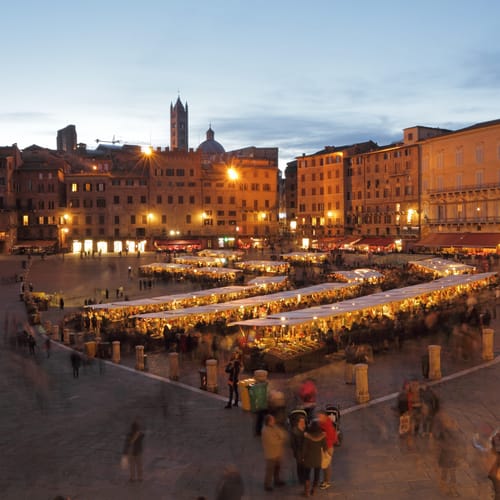
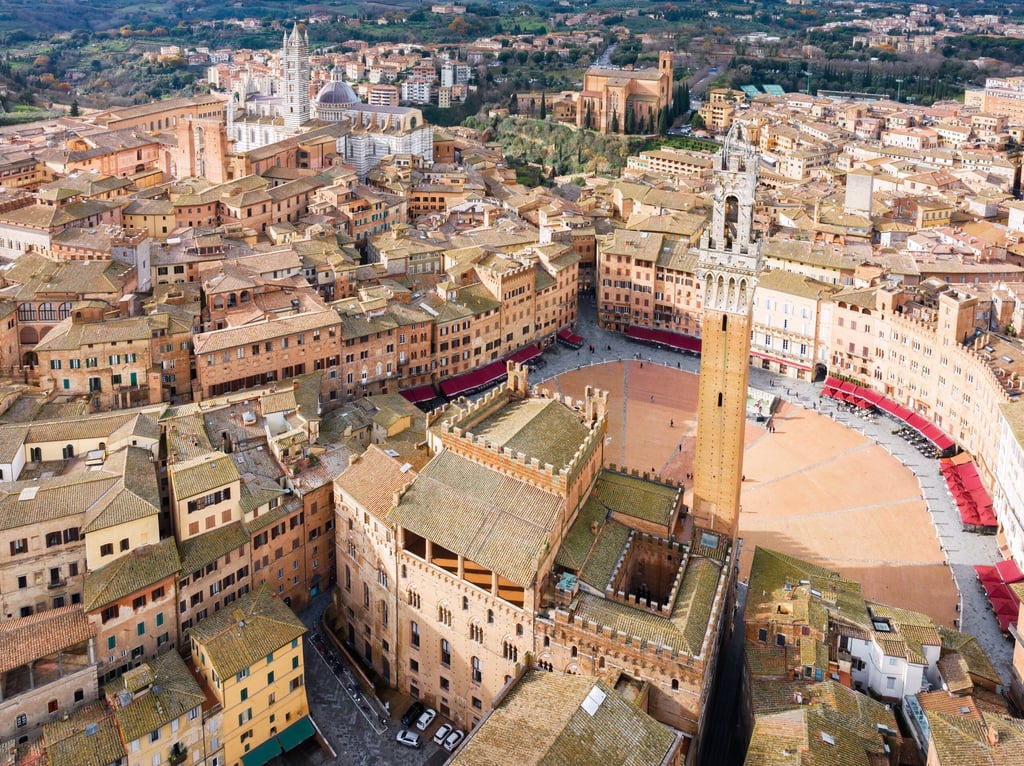
After a delicious bite and caffeine boost, continue on Via Banchi di Sopra until you reach the heart and soul of Siena: Piazza del Campo. This immense shell-shaped piazza surrounded by palace facades is known worldwide as a living representation of medieval Tuscany, thanks to its seemingly untouched architecture and the famous Palio, a historic horse race held in the square every summer.
In the square, you can admire Fonte Gaia, the largest fountain in the city. The original tunnel-fed fountain was constructed in 1342, an icon of medieval Sienese power that brought fresh water uphill to the city center. In 1419, the “Fountain of Joy” received an upgraded façade dedicated to the Virgin Mary, the traditional protectress of the city. The visible marble stonework is a recreation completed in 1869, as the original is now housed in the Santa Maria della Scala Museum to protect it from the elements.
The Palazzo Pubblico – or town hall – overlooks Piazza del Campo, housing unique frescoes depicting secular subjects instead of the religious themes typical to most public art of the era – exceptional for their time. The most famous secular fresco is The Allegory and Effects of Good and Bad Government by Ambrogio Lorenzetti, a poignant reminder to the early Renaissance-era leaders of Siena of how much was at stake as they governed its citizens.
From the Palazzo Pubblico, you can access the Torre del Mangia, the iconic focal point of the town’s skyline looming over the piazza. Those willing to climb over 400 narrow steps to the top of the tower are rewarded with a breathtaking 360-degree view of Siena and its surrounding countryside. Gazing across rolling hills dotted with cypress trees and verdant vineyards, most visitors agree that the view is worth the effort.
Afternoon: The Treasures of Piazza del Duomo
After scaling to new heights at Torre del Mangia, it’s time to refuel. Many of our concierge team members were born and raised near Siena, giving them inside knowledge of local restaurants and cafés. Whether the quick service of Caffe’ Fiaschetteria Il Pulcino or the classic cold cuts and aperitif at Gastronomia Morbidi, there is no shortage of local-approved lunchtime eateries. Contact the concierge before your day trip for their latest recommendations.
With hunger satisfied and your appetite for discovery renewed, make your way to Piazza del Duomo to admire some of the most magnificent treasures in Siena.
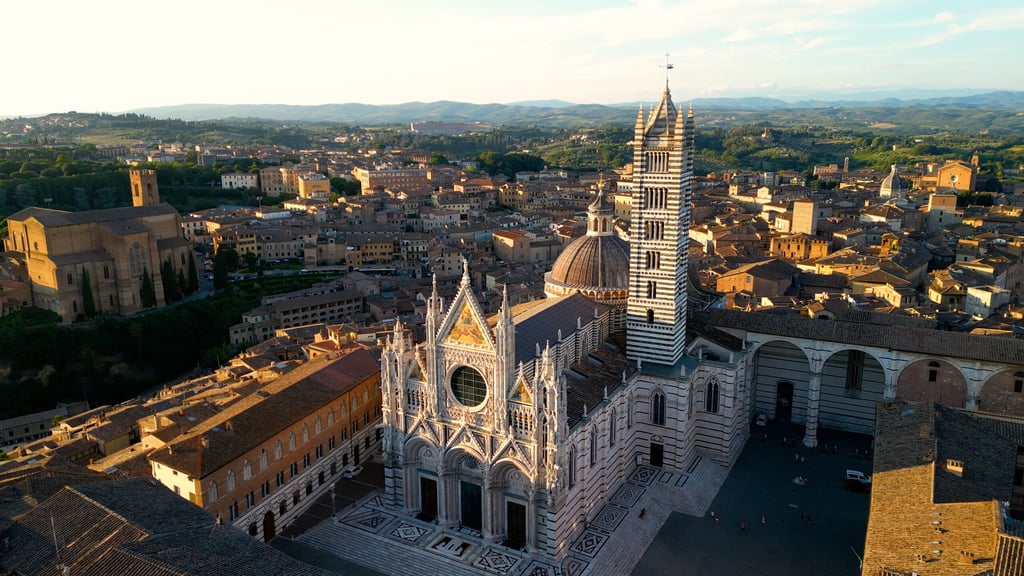
The Duomo, also known as the Cathedral of Siena, is a Romanesque Gothic architectural masterpiece. The exterior is spectacular, known for its bold marble stripes, ornate mosaics, and expansive rose window. The interior is equally as impressive, if not more so. The cathedral is decorated with striped white and greenish-black marble columns – the symbolic colors of Siena. Artistic and architectural touches from masters like Pisano, Donatello, Lorenzo Ghiberti, Bernini, and Michaelangelo are dispersed throughout, priceless treasures awaiting discovery with every step. Even the floor is a masterpiece, featuring a collection of mosaics that took hundreds of years to complete. In the Piccolomini Library located inside the cathedral, intricately painted Pinturicchio frescoes line the walls, depicting scenes from the life of Pope Pius II.
As you exit the Duomo, contemplating its deeply significant history and artistic splendor, make your way to the Santa Maria della Scala Museum conveniently located just beyond the cathedral. Its vast collection spans a labyrinth of hallways containing colorful frescoes, an archive of archaeological artifacts, and treasured spiritual relics.
On the southern side of the cathedral, you will find Museo dell’ Opera del Duomo, one of the oldest private museums in Italy. Alongside masterpieces by Duccio di Buoninsegna, Giovanni Pisano, Donatello, and Jacopo della Quercia, you will also find beautiful examples of the so-called “minor arts” such as precious silks, intricate gold smithing, and jewelry.
Evening: City Streets and Shopping
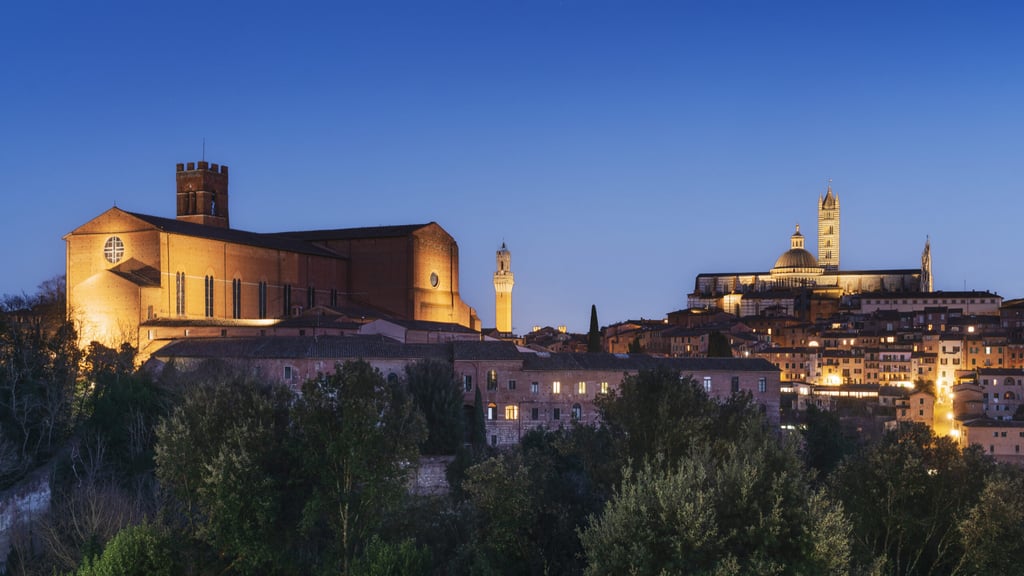
As the sun dips lower and the soft glow of streetlights reflects on weathered cobblestones, wanderlust beckons you to explore. Allow yourself to roam the narrow intricacies of Siena’s many paths as you gradually return to the parking lot. Stroll Via Banchi di Sopra in search of elegant souvenirs in its inviting shops. Stop by the Basilica di San Domenico, where the remains of Saint Catherine still lie in the reliquary. Dine by twilight at Osteria Le Logge, where traditional regional dishes are crafted to perfection by Mirko, a friend of Casali di Casole, using fresh seasonal ingredients. Or perhaps you prefer the exclusivity of La Taverna di San Guiseppe, an authentic restaurant 400 meters from the Piazza del Campo dating back to 1100 A.D., where made-from-scratch food and Tuscan wine are never in short supply.
Stars scatter across the darkening sky. The day draws to a close. As you drive away and Siena’s illuminated skyline gradually recedes into the distance, its essence lingers – a place that leaves its mark not just on the eyes, but on the heart. What is it about Tuscany that makes it feel so timeless? Through the ages, from the Etruscans to the 21st century, its traditions, art, and indomitable spirit have endured, weathering feast and famine, war and peace – and inspiring countless generations.
And then, just ahead, Casali di Casole comes into view. A tranquil haven in the heart of this storied land, it feels less like a retreat and more like a connection to the region’s legacy. Returning here, you can’t help but feel like a small yet meaningful part of Tuscany’s ongoing story. As your head sinks into the pillow, a final thought stirs before sleep takes hold: “What will tomorrow’s chapter hold?”